South Africa 2010: How One Continent Hosted the World and Changed Football's Geography
An Impossible Dream, Made Real
When FIFA awarded the 2010 World Cup to South Africa in 2004, the reaction ranged from cautious optimism to outright scepticism. Could the infrastructure hold? Would the stadiums be ready? Was Africa ready to host the world? The answers, when the time came, were yes, yes, and emphatically yes.
The 2010 World Cup was not just a football tournament. It was a statement — about African capability, African ambition, and African identity. It was held across ten cities in a nation whose very existence as a multiracial democracy was barely two decades old. The symbolism was staggering.
The Vuvuzela and the Voice of a Continent
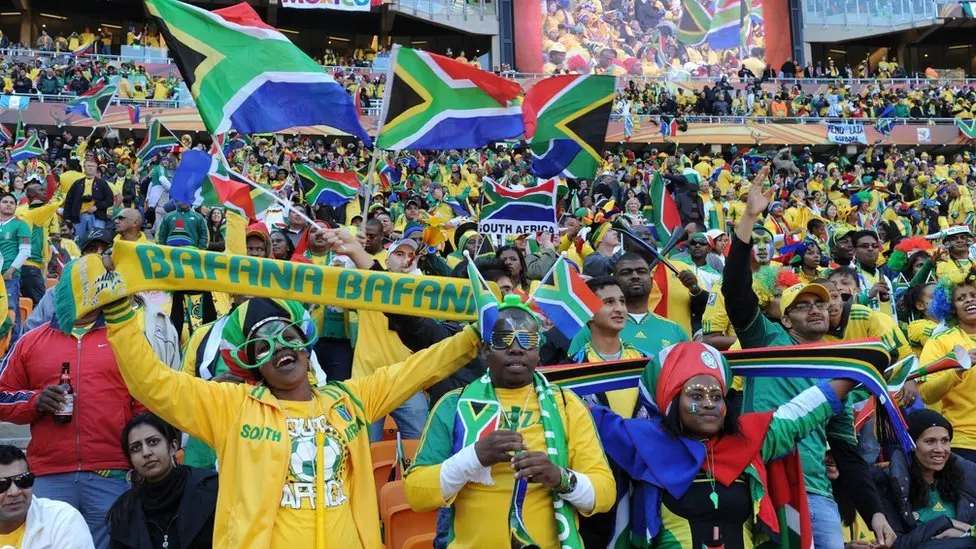
The tournament introduced the world to the vuvuzela — the plastic horn that filled every stadium with a wall of noise that polarised opinion globally. Critics complained it was too loud, too constant. But for African fans, it was their sound, their voice, their stamp on the most watched sporting event on Earth. The vuvuzela did not go away. It became the enduring sound of 2010.
Shakira's "Waka Waka" became the tournament anthem — still, arguably, the greatest World Cup song ever recorded. K'naan's "Wavin' Flag" was everywhere. The cultural output of that tournament was uniquely, proudly African.
On the Pitch
South Africa themselves became the first host nation in World Cup history to be eliminated in the group stage — a painful irony. But the tournament was rich with drama: Spain winning their first World Cup, Uruguay's run, the Germany vs Argentina spectacle, and Ghana's agonising quarter-final exit. Every game was played in front of electric African crowds who adopted every team, every underdog, every upset.
The Lasting Change
The 2010 World Cup demonstrated conclusively that Africa could organise, host, and deliver a major global sporting event. The stadiums — Cape Town, Soccer City, Ellis Park — are still in use today. The infrastructure built for the tournament benefited millions. And the confidence it gave African football, African business, and African governance was immeasurable.
It was, in every sense, a breakthrough moment for an entire continent.